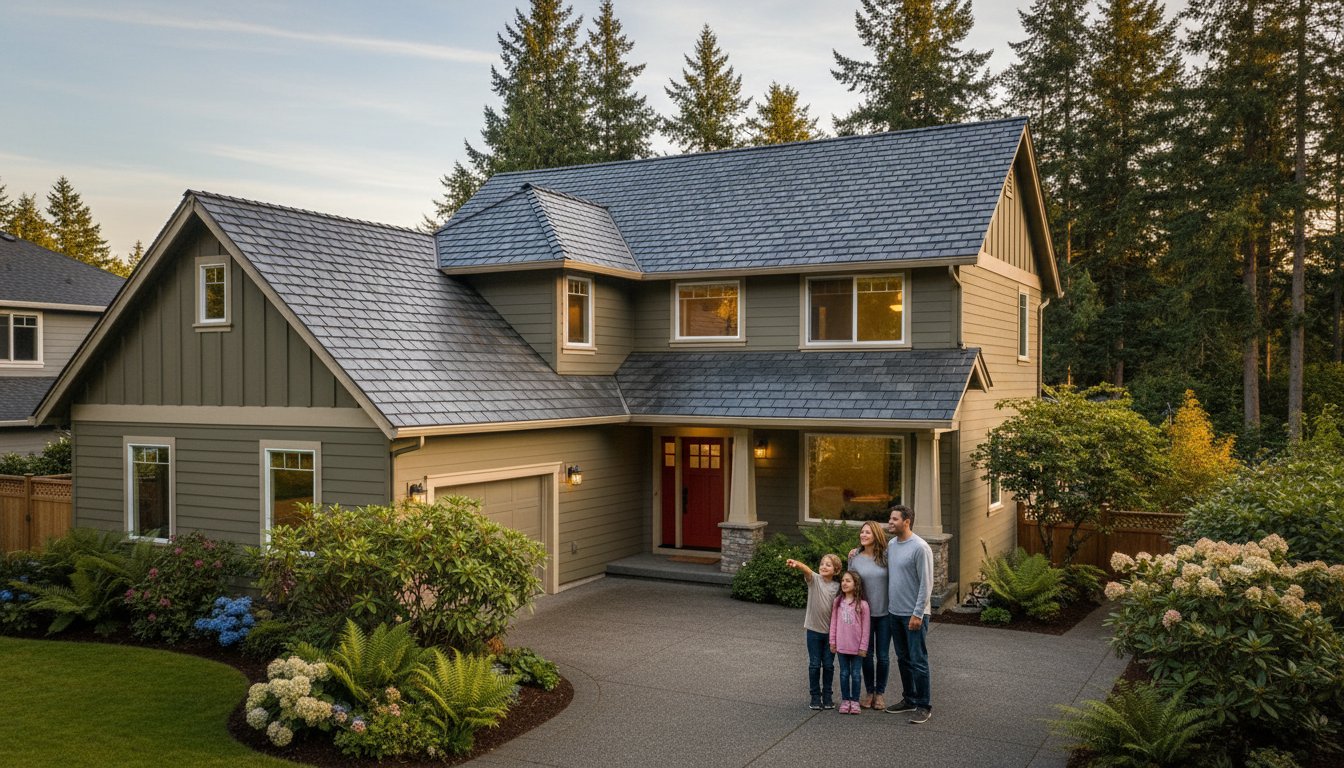
The traditional cedar shake or standard asphalt shingle you’ve always trusted might actually be the biggest liability for your Portland home as we approach 2026. You likely know the frustration of seeing moss growth return just 18 months after a professional cleaning, or the anxiety of hearing heavy rain pound against aging materials. It’s exhausting to maintain a property when the Oregon climate feels like a constant adversary. This is why many local homeowners are turning to synthetic roofing as a more dependable alternative. We believe your roof should provide peace of mind, acting as a protective shield for your family for the long road.
This guide explains how modern synthetic materials compare to traditional options in our unique climate to help you make a confident investment. You’ll learn why these systems are engineered to last 50 years or more while offering superior resistance to the damp conditions of the Pacific Northwest. We’ll break down the technical differences between polymer and composite systems, analyze how they boost home resale value, and show you how to achieve lasting curb appeal with precision and pride.
Key Takeaways
- Understand why Portland homeowners are shifting toward advanced polymer materials that mimic the beauty of slate and shake without the traditional weight.
- Compare the performance and durability of synthetic roofing against standard composition shingles to determine which system best protects your home’s structural integrity.
- Learn how non-porous engineering creates a natural barrier against moss and moisture, solving the most common roofing headache in the Pacific Northwest.
- Analyze life expectancy and resale value to see how a high-performance roof strengthens your investment in competitive markets like Beaverton and Lake Oswego.
- Discover why local expertise and certified journeyman craftsmen are essential for navigating Oregon building codes and ensuring a roof that is truly built for the long road.
The Rise of Synthetic Roofing in Portland: More Than Just Curb Appeal
Portland’s architectural landscape is undergoing a quiet revolution. By 2026, the adoption of synthetic roofing has transitioned from a high-end alternative to a primary choice for homeowners who value durability. These systems use advanced polymer-based materials designed to mirror the classic textures of slate, wood shake, or tile. From a master craftsman’s perspective, this evolution represents a necessary leap in building science. We no longer have to choose between a beautiful historic aesthetic and a roof that can handle the heavy moisture of the Pacific Northwest.
Choosing the right material is about more than just a transaction; it’s a commitment to protecting your home for decades. We believe in a “service-first” approach, which means we spend time listening to your goals before suggesting a solution. This ensures every installation reflects the precision and pride we bring to our work. It is about providing a steady sense of security for your most valuable asset.
To better understand how these materials perform and their aesthetic potential, watch this helpful video:
What is Synthetic Roofing Made Of?
These materials are the result of rigorous engineering. Most modern synthetics consist of recycled rubbers, specialized plastics, and proprietary polymers. To ensure they last through decades of exposure, manufacturers integrate UV inhibitors that prevent the material from becoming brittle or fading. They also include impact-resistant additives that meet Class 4 ratings, which is the highest level of protection against debris and hail. It’s helpful to understand the distinction between composite or synthetic shingles. While composite products often mix materials like fiberglass or compressed wood, true synthetics are typically pure polymer or rubber blends, offering superior flexibility and weather resistance.
Why Portland Homeowners are Making the Switch
The shift in 2026 is driven by a desire for the “forever roof.” In neighborhoods like Laurelhurst and Eastmoreland, maintaining the architectural integrity of a home is vital. Synthetic options allow a 1920s Tudor to keep its slate-inspired charm without the massive weight and maintenance costs of real stone. Homeowners are looking for long-term value that strengthens their existing structures. They want a roof built for the long road, one that offers peace of mind through every winter storm. This transition marks a move away from traditional asphalt toward high-performance synthetic roofing systems that truly stand the test of time.
Synthetic Roofing vs. Composition Shingles: A Portland Homeowner’s Comparison
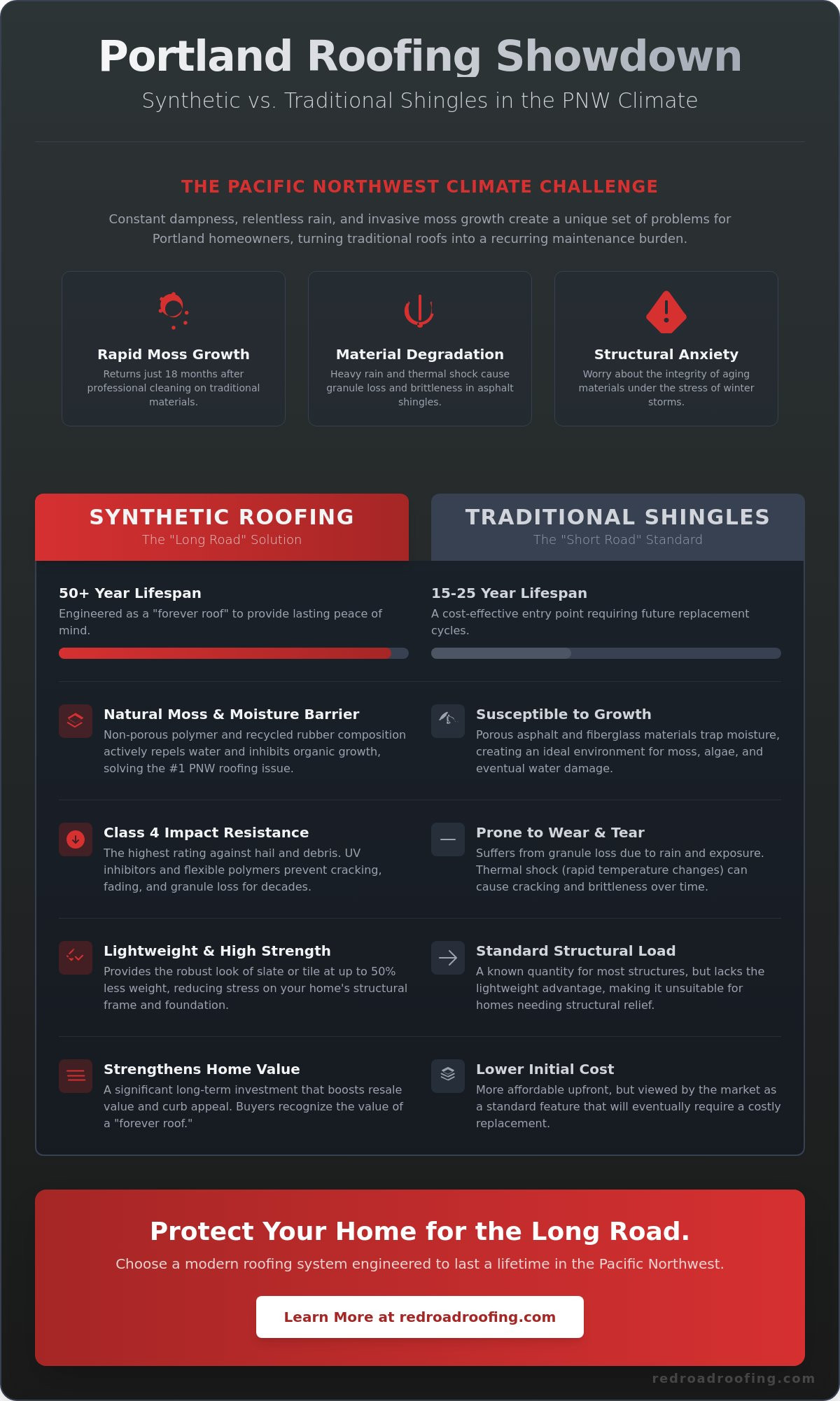
Choosing between traditional materials and synthetic roofing often comes down to how long you plan to stay in your home. Most local projects utilize composition shingle roofing in Portland because it provides a dependable, cost-effective entry point for weather protection. However, synthetic materials represent a shift from a “short road” maintenance cycle to a “long road” investment strategy. While standard shingles are susceptible to granule loss and thermal shock, synthetic polymers remain flexible and intact for decades.
Weight is a critical factor for many Portland residences, especially older homes in neighborhoods like Laurelhurst or Irvington. Synthetic tiles provide the heavy-duty look of slate or clay without the massive physical burden. They are significantly lighter than natural stone, often weighing up to 50% less, but they possess a higher tensile strength than asphalt. This means you get a roof that is easier on your rafters but harder on the elements. It’s a balance of structural safety and extreme durability.
We believe that a premium material is only as good as the hands that install it. The precision and pride required for synthetic systems exceed that of basic shingle applications. Every valley, flashing, and ridge cap must be handled with a master craftsman’s eye to ensure the system performs as intended. This isn’t just about nailing down a product; it’s about building a shield that lasts a lifetime. If you are curious about how these materials look on local architecture, you can view our recent projects to see the difference quality makes.
Durability and Impact Resistance
Oregon storms bring wind, heavy rain, and occasional debris. Synthetic shingles resist cracking, curling, and warping better than asphalt because they don’t dry out or lose protective granules over time. Most high-end synthetic products carry a Class 4 impact rating, which is the gold standard for residential protection. Class 4 impact resistance is the highest industry standard for hail and debris protection. This rating often leads to lower insurance premiums for homeowners who prioritize long-term stability.
Aesthetic Realism and Style Options
Achieving the look of hand-split cedar shakes or natural slate requires a master craftsman approach to design. Modern synthetic molds are cast from real wood and stone to ensure varied, natural patterns. This prevents the repetitive, “plastic” look associated with older composite materials. Color-fast technology is also a vital feature of these systems. It ensures your roof won’t fade or discolor under the high-altitude Oregon sun, maintaining its rich hue and curb appeal for over 50 years.
Engineered for the PNW: How Synthetic Materials Handle Portland Rain and Moss
Portland homeowners face a unique set of environmental challenges. Shaded Multnomah County yards are notorious for moss growth that can destroy a standard roof in less than two decades. Traditional asphalt shingles are porous, which allows moisture and spores to settle deep into the material. Synthetic roofing changes this dynamic entirely through advanced polymer science. These materials are engineered to withstand the specific humidity and rainfall patterns of the Pacific Northwest without the constant need for intervention.
Moss Resistance: The End of Zinc Strips?
Moss is the primary enemy of roof longevity in Oregon. It traps moisture, lifts shingle edges, and eventually rots the underlying plywood structure. Synthetic slate and shake products feature a smooth, non-porous surface that prevents organic debris from taking root. While standard composition shingles often require professional moss treatments every 48 to 60 months in our climate, synthetic polymers stay clear for significantly longer periods. This protects the structural integrity of your roof deck for 50 years or more.
- Sheds Debris: The slick surface of polymer shingles allows pine needles and leaves to slide off rather than accumulating.
- No Chemical Runoff: You won’t need to install unsightly zinc strips or apply harsh chemicals that wash into your garden.
- Zero Porosity: Because the material doesn’t absorb water, spores can’t find a foothold to begin the growth cycle.
Waterproofing in 40+ Inches of Annual Rainfall
Portland averages 42 inches of rain annually, making water-shedding efficiency the most critical metric for any roof. This volume of water demands more than just a surface covering; it requires a coordinated defense. High-performance synthetic roofing systems, such as F Wave, use an interlocking design that creates a watertight seal. This prevents wind-driven rain from being pushed upward under the shingles during heavy November storms, a common cause of leaks in older homes.
A “full system” installation is vital for success in the PNW. We use high-quality synthetic underlayments that provide a secondary layer of protection far superior to traditional felt paper. This comprehensive approach ensures your home stays dry even during record-breaking rain events. Our certified journeyman craftsmen focus on these technical details because we know precision is the only way to ensure a roof is built for the long road.
This shift toward engineered materials provides a major “Service-First” benefit. Homeowners see a massive reduction in maintenance requirements. You don’t have to worry about granule loss clogging your gutters or shingles warping after a wet winter. It’s a dependable, long-term solution that offers peace of mind. We take pride in installing systems that prioritize your home’s safety and eliminate the stress of frequent repairs.
Calculating the Long Road: Life Expectancy and ROI of Synthetic Systems
Choosing a roof isn’t just about the immediate cost. It’s about the decades that follow. In the Pacific Northwest, moisture is the primary enemy of any structure. While traditional asphalt shingles often struggle to reach their full potential here, synthetic roofing offers a different trajectory. It provides a level of durability that turns a standard home improvement into a generational investment.
When analyzing the roof life expectancy in Portland, the gap between materials is striking. Standard composition shingles typically last 18 to 22 years before the rain, wind, and moss take their toll. Synthetic systems are engineered to endure for 50 years or more. This longevity is backed by superior resistance to the freeze-thaw cycles common in our winters. Homeowners in areas like Lake Oswego or Beaverton often see immediate financial offsets through insurance. Most major insurers provide premium discounts for roofs with UL 2218 Class 4 impact ratings and Class A fire ratings. Because synthetic materials like F Wave are virtually hail-proof, they drastically reduce the risk of future claims.
- Moss Resistance: Synthetic surfaces don’t absorb water, preventing the organic growth that destroys asphalt shingles.
- Wind Performance: Many synthetic products are tested to withstand gusts up to 130 mph.
- Weight Efficiency: These systems offer the look of heavy slate or shake without the need for expensive structural reinforcement.
The 50-Year Warranty Reality
Manufacturers like DaVinci and F Wave have solidified their 2026 warranty structures to favor the homeowner. Unlike cheaper shingles that use prorated warranties, where coverage drops every year, these synthetic products offer non-prorated protection for the first 10 to 15 years. This means the manufacturer covers the full cost of replacement if a defect occurs early on. In 2026, we’re seeing a trend toward fully transferable warranties, which adds a layer of security for the next person who owns your home.
Resale Value and Curb Appeal ROI
In competitive markets like Beaverton, a synthetic slate or shake roof acts as a powerful differentiator. It provides neighborly reliability, looking just as crisp on year 20 as it did on day one. While the upfront investment is higher, the annual cost of ownership is lower. A roof that lasts 50 years eliminates the need for two additional tear-offs and replacements over a half-century. This long-term view is the core of our Craftsmanship You Can Trust philosophy. We don’t just install a surface; we build a long-term asset that protects your equity.
Ready to invest in a roof built for the long road? Contact our master craftsmen for a detailed ROI analysis today.
Precision and Pride: Installing Your Synthetic Roof in the Portland Metro Area
Portland averages 42 inches of rain per year. This constant moisture makes the installation phase the most critical moment in your home’s life cycle. Choosing synthetic roofing is a smart investment for 2026, but the material only performs as well as the hands that install it. In Oregon, adhering to the latest Construction Contractors Board (CCB) standards and local building codes isn’t just about legality; it’s about structural integrity. We take pride in our deep understanding of these regional requirements, ensuring every project meets the 2024 Oregon Residential Specialty Code (ORSC) for wind and moisture resistance.
Finding a Qualified Portland Roofing Contractor
A generalist might understand standard shingles, but specialized synthetic materials require a different level of expertise. You shouldn’t hire a contractor who treats these high-performance systems like a side project. Ask potential partners for their manufacturer certifications and a portfolio of local projects completed in the last 36 months. Look for transparency in the bidding process. A service-first mindset means a contractor who answers your questions directly and provides a detailed breakdown of the work. We believe in total clarity from the first handshake. Our team focuses on reliability and precision, ensuring you feel secure throughout the entire replacement process.
The Red Road Installation Process
Our approach is built on the philosophy that we listen first. Before any shingles are removed, we conduct a precision measurement of your home’s specific geometry. Our certified journeyman craftsmen then execute the installation with a focus on durability and aesthetic alignment. We know that a construction project can be stressful for a household. That’s why we’ve refined our process to minimize disruption for families in Gresham, Salem, and the wider metro area. We keep the job site clean and the communication lines open. Every project concludes with our rigorous “Built Right” inspection. This final check confirms that your synthetic roofing system is fully sealed and ready for the decades ahead.
Your home is your most valuable asset. It deserves a protective partner who values quality over shortcuts. Prepare your property for the long road with a roof that’s built to last and a team that stands behind every nail. Precision and pride aren’t just words to us; they’re the standard we bring to every Portland neighborhood we serve.
Schedule your expert synthetic roofing consultation with Red Road Roofing today.
Invest in a Shield Built for the Long Road
Choosing synthetic roofing for your Portland home in 2026 is a strategic move to protect your property’s value. These systems are engineered to thrive despite Portland’s average of 154 rainy days per year, offering a moisture-resistant surface that prevents the moss growth common on older cedar or composition roofs. While standard shingles often require replacement after 20 years, a high-quality synthetic system is built to last 50 years or more. This longevity transforms a necessary repair into a generational investment. At Red Road Roofing LLC, we approach every project with the steady hands of Certified Journeyman Craftsmen. We’re Oregon CCB licensed and insured, specializing in PNW-specific full-system installations that stand up to the toughest winters. Our team believes in transparency and listening first to ensure your home remains a safe harbor. It’s about more than just coverage; it’s about the peace of mind that comes from precision and pride.
Get a Precision Quote for Your Portland Synthetic Roof
Your home deserves a roof that’s as resilient as the Pacific Northwest spirit.
Frequently Asked Questions
Is synthetic roofing more expensive than traditional asphalt shingles in Portland?
Yes, synthetic materials require a higher initial investment than standard asphalt products. Industry reports from the 2024 Remodeling Cost vs. Value data show that premium synthetic installations typically cost two to three times more than architectural asphalt shingles. This price reflects the 50 year lifespan and superior durability of the product. It’s a strategic choice for homeowners who plan to remain in their residence for 15 years or more to realize the long term value.
How long does a synthetic roof actually last in the PNW climate?
Most synthetic roofing systems are engineered to last 50 years or longer in the specific conditions of the Pacific Northwest. Manufacturers like DaVinci Roofscapes offer 50 year limited warranties because these polymer materials don’t rot or warp when exposed to Portland’s 40 inches of annual rainfall. While traditional shingles often require replacement after 20 years in our damp environment, synthetic options provide a lifespan that’s 2.5 times longer. It’s a solution built for the long road.
Can synthetic roofing shingles really resist moss growth in shaded areas?
Synthetic shingles are highly resistant to moss and algae because they’re non porous and don’t absorb moisture. Unlike wood shakes or standard shingles that trap organic debris, polymer tiles don’t provide the damp environment moss needs to take root. This is a critical advantage for homes in the West Hills where 70 percent of properties face heavy tree canopy coverage. You’ll spend significantly less time on maintenance and cleaning over the decades.
Are synthetic roofs environmentally friendly or recyclable?
Yes, many synthetic products are composed of up to 80 percent recycled post industrial materials. Brands like Brava and EcoStar create tiles that are 100 percent recyclable at the end of their 50 year service life. This prevents thousands of pounds of roofing waste from entering Oregon landfills. By choosing these materials, you’re investing in a sustainable system that balances high performance with environmental responsibility and pride in craftsmanship.
Is a synthetic roof loud during heavy Portland rainstorms?
No, synthetic roofs aren’t louder than traditional shingles during heavy rain events. Because they’re installed over a solid plywood deck and high quality underlayment, the sound is dampened effectively before it reaches the interior. Acoustic tests show that the sound profile is nearly identical to asphalt. You can enjoy the peace of your home even when Portland experiences 1.5 inch rainfall events. We focus on precision during installation to ensure every layer contributes to a quiet home.
Do I need to reinforce my roof structure before installing synthetic slate?
Structural reinforcement is rarely necessary because synthetic slate weighs about 25 percent less than natural stone. While a square of natural slate can weigh 800 pounds, synthetic alternatives typically weigh between 200 and 340 pounds per square. This allows you to achieve the aesthetic of a historic estate without the structural engineering costs. Our team evaluates your existing rafters to ensure they meet the 2023 Oregon Residential Specialty Code requirements before we begin.
What is the fire rating of synthetic roofing materials?
Most premium synthetic roofing materials carry a Class A fire rating, which is the highest level of protection available for residential structures. This rating means the material has passed the ASTM E108 test for resisting flame spread and penetration. In areas near the Tualatin Mountains where wildfire risk is a concern, this rating provides essential peace of mind. It’s a dependable way to strengthen your home’s exterior against external heat sources and flying embers.
Can I walk on a synthetic roof for maintenance or gutter cleaning?
You can safely walk on synthetic tiles without worrying about the cracking or breakage common with natural slate or clay. These materials are tested to meet Impact Class 4 standards, which include resisting damage from 2 inch hailstones. While the surface can be slippery when wet, the tiles won’t fracture under the weight of a technician. We take pride in our careful approach, ensuring your gutters stay clear while maintaining the integrity of your protective system.